PEAK YEAR
2 856in 1946
15% of all records fall in a single year — the post-WWII surge after the 1944 Year of Naturalization.
19 043 legally gazetted name changes recorded by the British Mandate administration between October 1921 – December 1947. An interactive exploration of who changed their name, what they changed it to, and what the historical record can — and cannot — tell us about why.
What stands out
15% of all records fall in a single year — the post-WWII surge after the 1944 Year of Naturalization.
One city — Tel Aviv — accounts for nearly a third. Jerusalem and Haifa together add another quarter.
Cohen is the single most adopted new surname — among 4,900+ distinct destinations.
Not every filing is a surname change — 16% of records keep the surname unchanged, typically changing only the given name.
Across 1921–1947, thousands of residents of British Mandate Palestine — immigrants and locally born alike — legally changed their names. Every such change was published in the Palestine Gazette, the official journal of the Mandate government. This dashboard presents 19 043 name-change records extracted from those gazette pages.
Many of these changes adopted Hebrew-origin surnames in place of names associated with the diaspora (German, Polish, Yiddish, Arabic, Russian, and others). This pattern is documentable in the names themselves — but the gazette records the what, not the why. Whether individual changers were motivated by ideology, family decision, practical legal considerations, or assimilation pressure is not in the record.
The dataset runs from the early 1920s through the end of the British Mandate — beginning with the first name changes registered under the Mandate administration and continuing through the rise of Nazism, mass immigration, world war, the Holocaust, and the political struggle over Palestine's future. Use the sections below to explore patterns in when, where, by whom, and how names were changed.
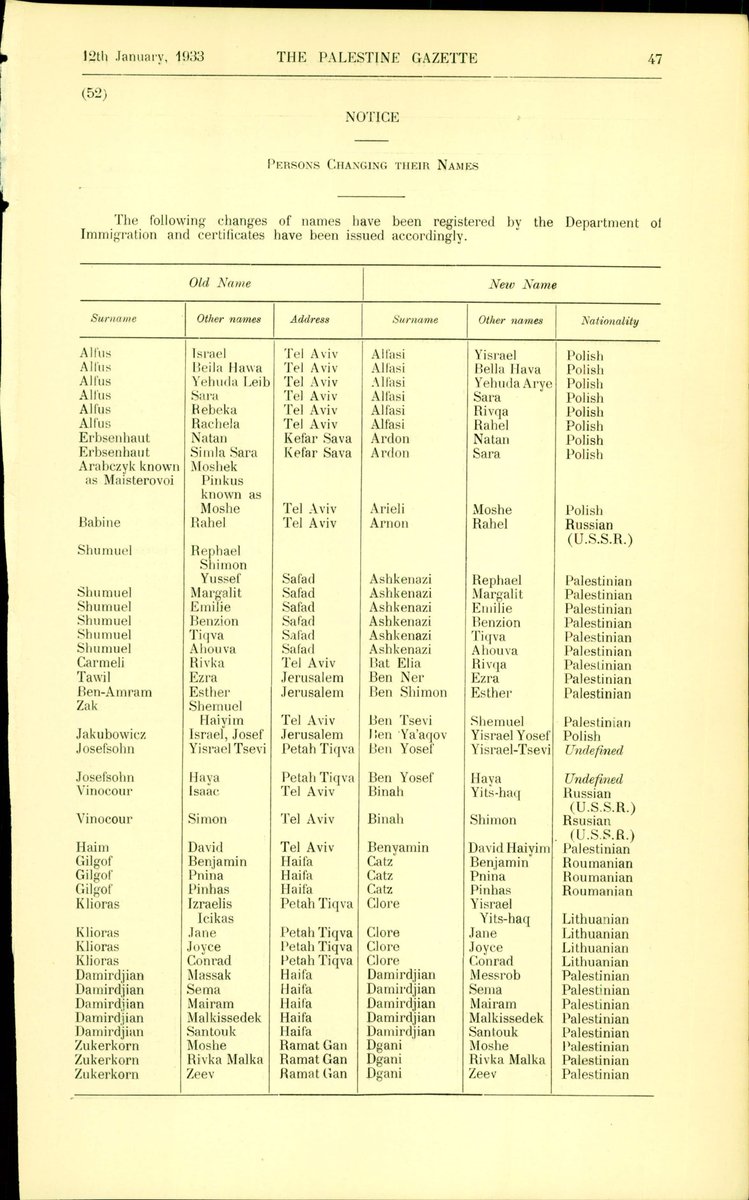
The original gazette pages are scanned images — the name-change tables were never digitized before this project. Each page was processed using AI-based OCR (Google Gemini) to extract the structured fields. Only high-confidence records — those that passed the project's automated quality checks — are included here.
For each row the system records: old surname, old given names, new surname, new given names, nationality (administrative citizenship), and address. Two further labels are added automatically: whether the name adopts a Hebrew-origin element (computed by a transparent lexicon rule, no AI) and how the name was transformed (computed from the names themselves). The methodology section details limitations.
The dataset is a single, continuous record spanning the whole Mandate — the high-confidence and recovered name-change notices, from the first ones in the early 1920s through to 1947, all read from the same official source. It captures a large share of the period's legal name changes rather than every one; the scope note in the Context section sets it against the wider total. The earliest volumes print the table in a different three-column layout (Old Name | Address | New Name) and were transcribed directly from the page images. Because that early layout has no nationality column, nationality is usually blank for those records. The Hebraization column, by contrast, is filled for every record: it is the transparent lexicon rule described below, applied uniformly across all years (the earliest records simply predate the project's original AI Hebraization labeling, which the dashboard no longer uses). One year is absent altogether: the gazette's 1927 name-change notices were not publicly available, so 1927 has no records.
m-7121-5.pdf p.461). For a
formal citation, locate the original gazette issue by its
gazette_date.
Open for academic and educational use. When citing a specific record,
prefer the original gazette issue — located by its gazette_date
— over this dashboard.
The record runs as one continuous series across the whole Mandate. Name changes were already being registered through the early 1920s — a steady opening stream — before filings cluster sharply around two later peaks: the 1933–35 wave that followed the rise of Nazism, and the 1944–46 surge after the Yishuv's Year of Naturalization and the Hebrew Name. One year, 1927, is missing entirely — the gazette's 1927 name-change notices were not publicly available, so the chart breaks there. The gold line shows the share of name changes that adopt a Hebrew-origin name — measured here by a transparent lexicon rule (see the note below the chart). Hebrew-name adoption was already common in the 1920s, climbs through the 1930s, and holds around two-thirds of all filings.
1946 alone accounts for 15% of every record in the dataset — the single largest year of the entire Mandate period.
The dataset sits inside a longer arc of cultural and political change. The milestones below — from the revival of spoken Hebrew, through the Mandate decades that opened with Hebrew's recognition as an official language and the immigration waves of the 1920s, to statehood — give the historical scaffolding around the administrative record. These dates are context, not data: they explain the world the gazette was published into.
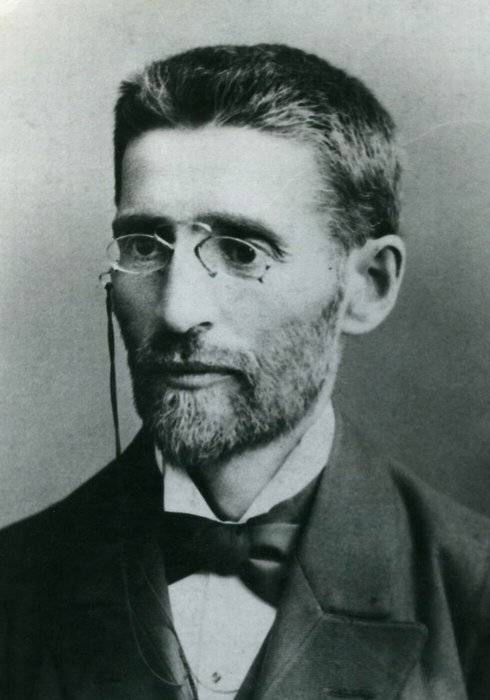
Eliezer Ben-Yehuda, the central figure in the revival of spoken Hebrew, was among the earliest to Hebraize his surname (from Perelman to Ben-Yehuda). Some First Aliyah immigrants followed; the practice spread widely during the Second Aliyah (1904–1914).
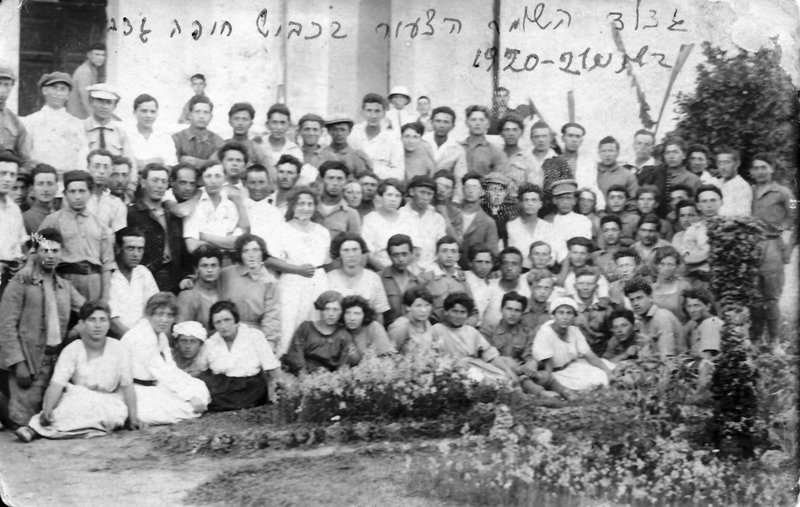
After the First World War some 35,000 mostly young immigrants — the Third Aliyah — arrived from Eastern Europe, many drawn to collective farms and labour. Steeped in the revival of Hebrew, these halutzim were among the most enthusiastic Hebraizers of their own names — the generation whose filings open this record.
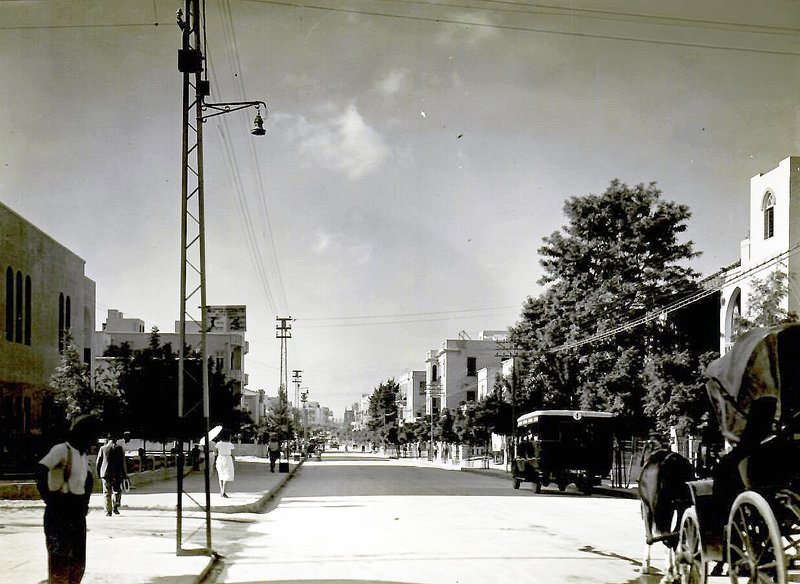
In 1921 the British administration granted Tel Aviv autonomous township status, separating it from Jaffa. The first self-governing Hebrew-speaking town grew explosively through the decade — and it accounts for nearly a third of every name change in this dataset, more than any other place.
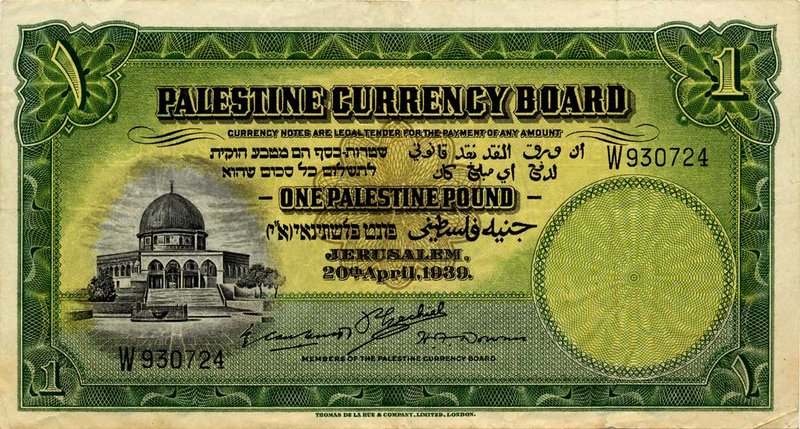
The League of Nations confirmed the British Mandate in 1922, and the Palestine Order in Council made Hebrew one of the territory's three official languages, alongside English and Arabic. Official recognition gave the revived language — and the Hebraized names built from it — a legal footing precisely as the earliest records in this dataset, from 1921, were being registered.
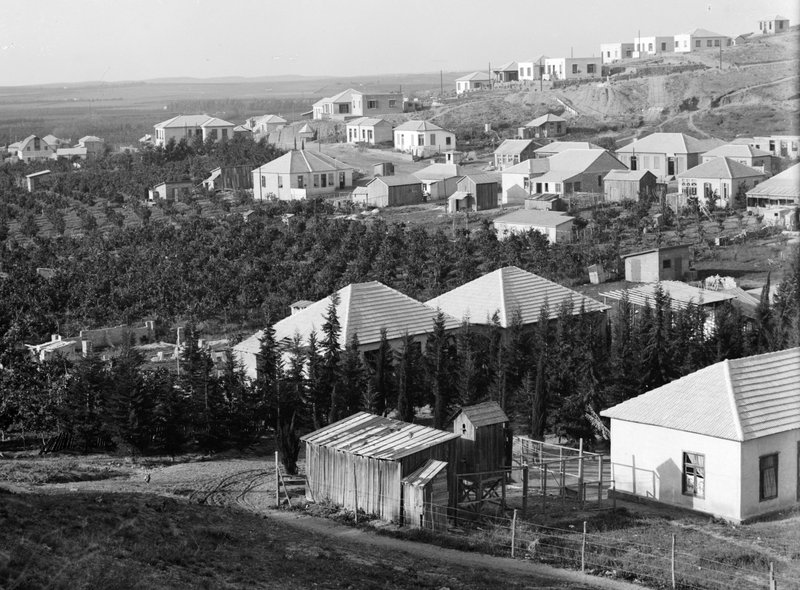
Roughly 80,000 immigrants — predominantly middle-class families from Poland — arrived across these years, founding new towns and colonies and swelling the cities. It is reflected directly in this dataset: after Mandate "Palestinian" citizenship, Polish is by far the most common origin among people changing their names.
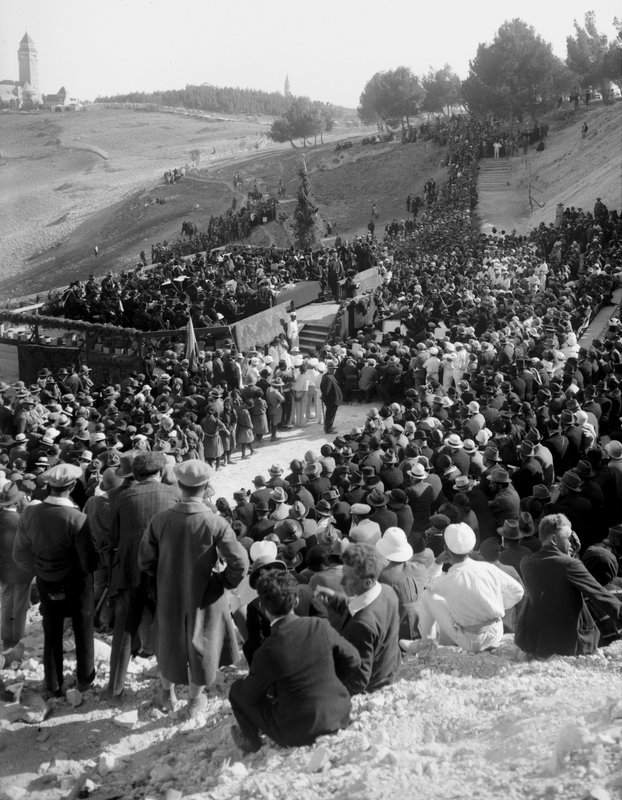
The Hebrew University of Jerusalem was inaugurated on Mount Scopus in April 1925, teaching in Hebrew and anchoring a widening network of Hebrew-language schools, newspapers, and cultural institutions. This everyday normalization of the language is the backdrop to the Hebrew-origin names already common in the dataset's 1920s records.
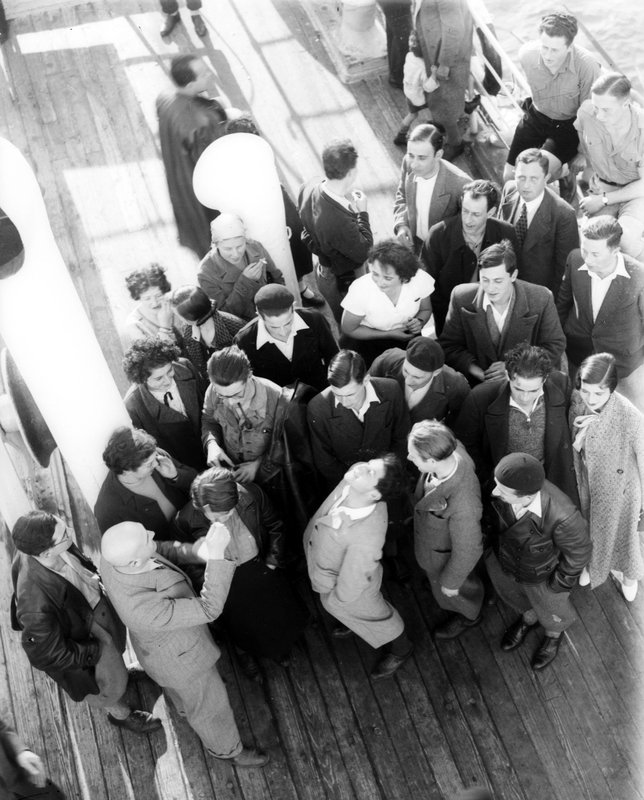
The largest interwar wave — roughly a quarter of a million people — arrived across the 1930s. After Hitler took power in 1933, many were German-speaking professionals (the "Yekkes"). This wave sits directly behind the dataset's first great surge of filings in 1933–35 — visible on the timeline — and behind its German-origin changers.
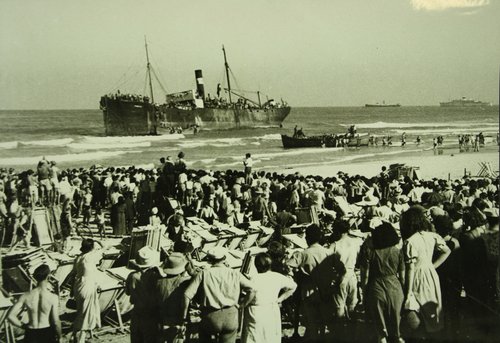
Nazi Germany's Reich Citizenship Law (15 September 1935) revoked the German citizenship of Jews. Many who reached Mandate Palestine in the following years appear in this dataset as "Stateless" or "formerly German".
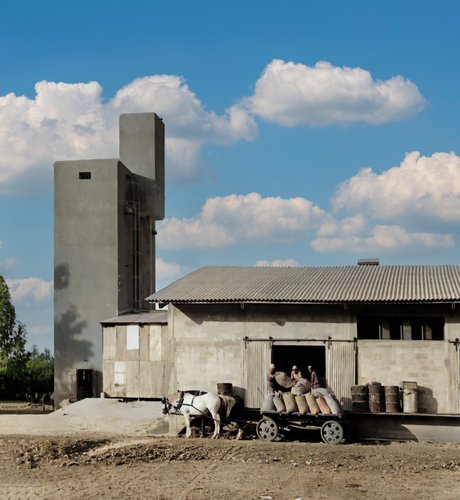
The Yishuv leadership and the Jewish National Council formally declared a year-long campaign. A committee chaired by Mordechai Nemzabi published guidelines for crafting Hebrew surnames. The sharp uptick in 1944–46 gazette volume tracks this campaign. (background)
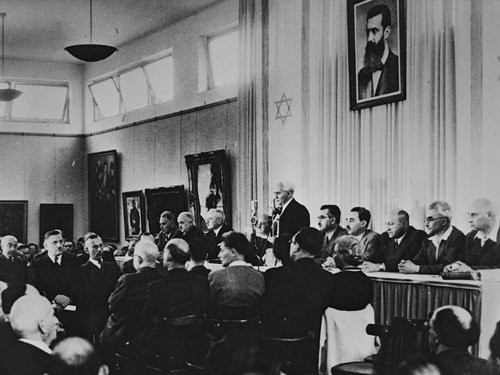
The dataset ends at the close of the British Mandate. After Israel's founding in May 1948, name-changing accelerated dramatically: Ben-Gurion required Hebraization for diplomats and senior military officers in the mid-1950s.
The "nationality" recorded in the gazette is the Mandate's administrative citizenship category, not self-identification or ethnicity. "Palestinian" denotes Mandate citizenship (anyone naturalized or born under the Mandate, regardless of religion or ethnic background). Other labels are citizenship of origin before immigration. Bars are color-coded by region.
How many name-changers from each citizenship group adopted a Hebrew-origin surname (using Hebrew morphemes like Ben-, Bar-, Har-, or a Biblical / modern Hebrew word).
Many original surnames carried suffixes characteristic of Yiddish, German, Slavic, or Russian usage (-stein, -berg, -ski, -man, -ovich). Bars show how many people bore each suffix; gold diamonds show the share who adopted a Hebrew-origin new name.
Name changes weren't all the same. Some adopted entirely unrelated Hebrew names; others adapted the sound of their original name; still others added a Hebrew prefix like Ben- ("son of") to create a patronymic. The categories below are determined algorithmically from string similarity and phonetic comparison — no human judgment is involved in the labeling.
The 20 most-chosen new surnames (excluding rows where only a given name changed). Names in gold use a Hebrew prefix (Ben-, Bar-, Har-); names in teal are everything else, dominated by classical surnames like Cohen, Levi, and geographic forms (Mizrahi = "easterner", Israeli).
A small but striking pattern: name-changers translating the meaning of their original surname into Hebrew. Goldberg (German "gold mountain") becomes Har-Zahav (Hebrew "mountain of gold"). Baker becomes Nachtomy. Tile size = number of records.
680 name changes in this dataset preserve the meaning of the original surname while rendering it into Hebrew. The cards below show one example per concept — the chip on each card names the shared meaning, and the small pill shows the morpheme pair the detector matched.
Across the dataset, 15 946 filings changed the surname itself (not just the given name). The single most common pattern is adopting an entirely new name with no traceable link to the old one (64% of surname changes) — though most of those are still Hebrew. But a large share keep a visible thread to the original: 12% are sound-alike adaptations that keep a familiar surname recognizable (Kohn, Kagan → Cohen), 8% are minor spelling changes, 10% build a biblical or symbolic form with Ben-/Bar-/Har- (Ben-Ezer, Ben-Nun), and 4% translate the original's meaning into Hebrew (Teitelbaum → Tamari, 'date palm'). Origins are dominated by Eastern Europe and Levant surnames.
The new names people converged on most often.
The surnames most often changed away from.
Distinct original surnames that all converged on the same adopted name.
Selection. Every filing where the surname actually changed (the new surname differs from the old, ignoring case and spacing; given-name-only changes are excluded) is grouped by its exact old → new pair. The 30 pairs with the most people are shown, largest first — the most frequent transitions. The long tail of rare, one-off changes is not visible in the diagram.
Origin colour. Each original surname is coloured by the name's own linguistic origin — its etymology — not by the bearer's citizenship. A Yiddish name (Landsman) or a German one (Adler) reads as Eastern / Central European even when the person was a Mandate "Palestinian". Origins are assigned from onomastic and genealogical sources: Slavic, German and Yiddish morphology (-ski, -baum, …) and a curated list of verified names (Sephardic Abastado, Persian Jacobzade, Yemenite Yehia, …). Arabic patronymics, which a spelling alone cannot pin to a sub-region, keep the bearer's recorded region (Levant or Middle East); only a name with no linguistic marker falls back to recorded nationality.
Type of change. Flows and adopted names are coloured by a transparent, rule-based classifier (no AI) that compares the two spellings: sound-alike adaptation, minor spelling change, Hebrew/symbolic prefix, translated meaning, shortening, or entirely new name.
Limitations. Only the most frequent transitions appear; rarer changes are invisible here. Transliteration and spelling variants (Cohen / Kohn / Kahn) can split or merge what was really one name. The “type of change” is a best-effort linguistic guess, and some adopted names have more than one plausible reading.
Name changes were concentrated in the urban centers of the Jewish Yishuv, but the data also includes kibbutzim, moshavim, mixed cities (notably Jaffa), and a separate category for British military personnel (M.E.F.). Colors below distinguish those locality types.
address field
is preserved separately for linguistic analysis.
Tel Aviv alone accounts for 31% of all records. With Jerusalem and Haifa, three cities cover the majority. M.E.F. — British Middle East Forces — represents the soldiers who changed names while stationed in the region.
Many name changes appear in clusters: people sharing the same original surname, the same new surname, the same city, and the same gazette issue. These clusters likely represent families or households — but the gazette does not document kinship, so this is an inference, not a confirmed fact.
22 people share one original surname, one new surname, one city, and one gazette issue — almost certainly an extended household filing together. The dataset records 3 718 such co-published groups in total.
Each card below shows a single co-published group: a shared original surname, a shared new surname, in one place at one publication date. Cards are sampled across transformation strategies; size = number of people in the group.
Kinship is inferred from shared surname + city + gazette issue — not documented in the source.
Kinship is inferred from shared surname + city + gazette issue — not documented in the source.
Kinship is inferred from shared surname + city + gazette issue — not documented in the source.
Kinship is inferred from shared surname + city + gazette issue — not documented in the source.
Kinship is inferred from shared surname + city + gazette issue — not documented in the source.
Kinship is inferred from shared surname + city + gazette issue — not documented in the source.
Kinship is inferred from shared surname + city + gazette issue — not documented in the source.
Kinship is inferred from shared surname + city + gazette issue — not documented in the source.
Kinship is inferred from shared surname + city + gazette issue — not documented in the source.
Read one notice at a time, these are dry administrative filings. Read at scale — all 19 043 of them — they let us measure a process that the historical literature has mostly described through individual examples. The seven findings below set what the data shows against what scholars have argued, and connect the renaming of people to the better-known renaming of places. Each is grounded in the charts above; interpretive framings are attributed to the historians who made them, and the limits of the evidence are stated plainly.
The romantic image of Hebraization — Goldberg lovingly rendered as Har-Zahav, "mountain of gold" — turns out to be the exception. Of the 15 946 filings that changed the family name, roughly two-thirds (64%) adopted an entirely new surname with no traceable link to the old one. Only about a third (34%) kept any visible thread — a sound-alike adaptation, a minor spelling change, or a Ben-/Bar-/Har- patronymic — and meaning-preserving translation accounts for under 4% (680 records). This quantifies a question the narrative scholarship left as anecdote: translation was available and even recommended in the 1944 how-to booklets, but people rarely chose it. The dominant mode was rupture — exactly what the ideology of shlilat ha-galut ("negation of the diaspora") predicts: the point was to shed the exilic self, not faithfully render it. Ben-Gurion's own change (Grün → Ben-Gurion) is rupture, not translation. Caveat: "complete replacement" is an algorithmic label for the absence of a detectable phonetic or semantic link; a minority may preserve a meaning outside our lexicon, so 64% is an upper bound on rupture.
The closest tie to the place-name scholarship is that the two renamings were contemporaneous and shared a vocabulary. The meaning-preserving translations here cluster overwhelmingly on landscape and material — tree, silver, gold, stone, iron, field, mountain, forest, rose, wine, deer, lion. On top of that, about 40% of all adopted surnames end in -i or -y — an ending-based proxy for the Hebrew -i nisbe ("of / belonging to" — Aharoni, Giladi, Carmeli); it counts some look-alikes but is dominated by genuine nisbe forms. Many more use Ben-/Bar-/Har- prefixes that graft the bearer onto kin and terrain (Har-Zahav, "mountain of gold"). Azaryahu & Golan (2001) describe the map's Hebraization as "naturalization" — making an immigrant population feel indigenous by clothing the land in Hebrew names of plants and animals. The personal names did the same work on the body. Crucially, this dataset (1921–1947) coincides with the voluntary, bottom-up, pre-state phase of place renaming — the Jewish National Fund's Names Committee (founded 1925; ~215 settlements named by 1948; Bar-Gal) — not the post-1948 state machinery (Ben-Gurion's Negev committee, 1949; the Government Names Committee, 1951). The 1944 "Year of Naturalization and the Hebrew Name" fused the two explicitly. This twin-indigenization reading is our synthesis: the onomastic and political-geography literatures have largely run in separate channels.
Name changes concentrate in three cities — Tel Aviv, Jerusalem, and Haifa together account for about 63% of all records — but the propensity to adopt a Hebrew name varies systematically by locality type. The veteran Zionist colonies and planned settlements show the highest rates (Hadera 67%, Rehovot 70%, Petah Tikva 67%), while the older mixed and holy cities run markedly lower (Jerusalem 53%, Haifa 57%, Jaffa 43%, Safed 37%). Tel Aviv — the "first Hebrew city" — sits in the middle (61%) yet carries a third of the entire volume. This is a personal-name analogue to a spatial pattern in the toponymy literature: Hebraization radiated outward from zones of dense Zionist settlement, while cosmopolitan cities with established Sephardi, Mizrahi, religious, and foreign-national communities were more conservative. The data shows the gradient; it can only suggest the mechanism. Caveat: several high-rate towns rest on small samples (n≈100–200); the big-city contrasts (n in the thousands) are robust.
Filings come in waves — a steady 1920s stream, a mid-1930s surge after the rise of Nazism and the Fifth Aliyah, and a far larger 1943–47 climb peaking in 1946 (2 856 filings, the single largest year). But the Hebrew-adoption rate did not climb with the volume: it was already high in the 1920s and held around 60% throughout — no higher at the 1946 peak than two decades earlier. What changed over time was the number of people acting, not the intensity of the individual impulse. The Gazette record tracks immigration waves and political moments (the 1935 refugee influx, the 1944 Naturalization Year, the run-up to statehood) more than a deepening national zeal — a useful corrective to any "Hebraization steadily intensified" narrative. Heavy caveat: per-issue dates are approximate (see Methods); the broad wave structure is reliable, but year-to-year rate wiggles should not be over-read.
Roughly a third of all filers (32%) bore a recognizably diaspora surname suffix — -man, -ski, -berg, -stein, -baum, -son, -witz, -ov — and about 63% of them adopted a Hebrew name, with the most distinctively Ashkenazi endings shed at the highest rates. This is the concrete machinery behind shlilat ha-galut. Many of these European surnames were themselves external impositions — names assigned to Jews by 18th–19th-century Austro-Hungarian and Russian authorities — so discarding them was experienced less as losing a heritage than as erasing a bureaucratic stigma. Khazzoom's (2003) "great chain of orientalism" sharpens the point: a Hebrew name let an Ashkenazi shed the stigmatized European-ghetto marker without becoming assimilationist-European, and without any "Eastern" coloring either — a third path between the shtetl and the West.
There is real convergence: Cohen is the single most-adopted new surname (204 filings), drawing people from 59 distinct original surnames, and the same magnet effect pulls many origins onto Israeli, Mizrahi, Barzilai, and the Ben- patronymics. Yet the data resists a simple homogenization story: those 15 946 surname changes still produced 4 844 distinct new surnames (from 6 038 distinct originals), and the new-name pool is only modestly more concentrated than the old. Hebraization was therefore convergent and generative at once: it funneled people toward a shared symbolic vocabulary — priestly names, collective-identity names (Israeli, Mizrahi = "easterner"), a stock of nature-roots — while spawning thousands of freshly coined individual names. It standardized the register of a Hebrew name without flattening the person.
The Gazette's name-change mechanism was overwhelmingly an instrument of Jewish Hebraization: the project's companion study finds only ~2% of changes involve an Arabic-form name, and Palestinian-Arabs scarcely used it. And it complicates the assumption that Hebraization was a European project: among citizenship categories with adequate samples, the Middle Eastern ones show the highest adoption rates of all — Iraqi 83%, Yemenite 69% — at or above the Eastern-European categories (Polish 67%). Because Arabic-form changes are so rare, these Iraqi- and Yemenite-citizen filers were almost certainly Jewish immigrants, so the pattern lines up with the documented (and much-debated) history of Mizrahi / Arab-Jewish name Hebraization — participation versus coercion (compare the comparative case of state-mandated "patronymic nationalism" in 1930s Turkey, Szurek 2013). But that ethnic reading is inferred from context, not read off the record: the dataset reports an outcome by citizenship, not the bearer's ethnicity or motive. Caveat: the "nationality" field is Mandate citizenship, not ethnicity or religion — "Iraqi," "Yemenite," and "Polish" are administrative origin labels, and "Palestinian" (the largest group, 9 030 records at 59%) means a naturalized Mandate citizen of any background, predominantly Jews.
Historical context is drawn from the works below. Tags mark peer-reviewed / academic primary encyclopedic sources. Empirical claims about the dataset are our own; interpretive characterizations are attributed to their authors.